Zara Weber · 11 October 2026
Monitoring Platforms and Their Role in Tracking Search Engine Attention After Domain Consolidations
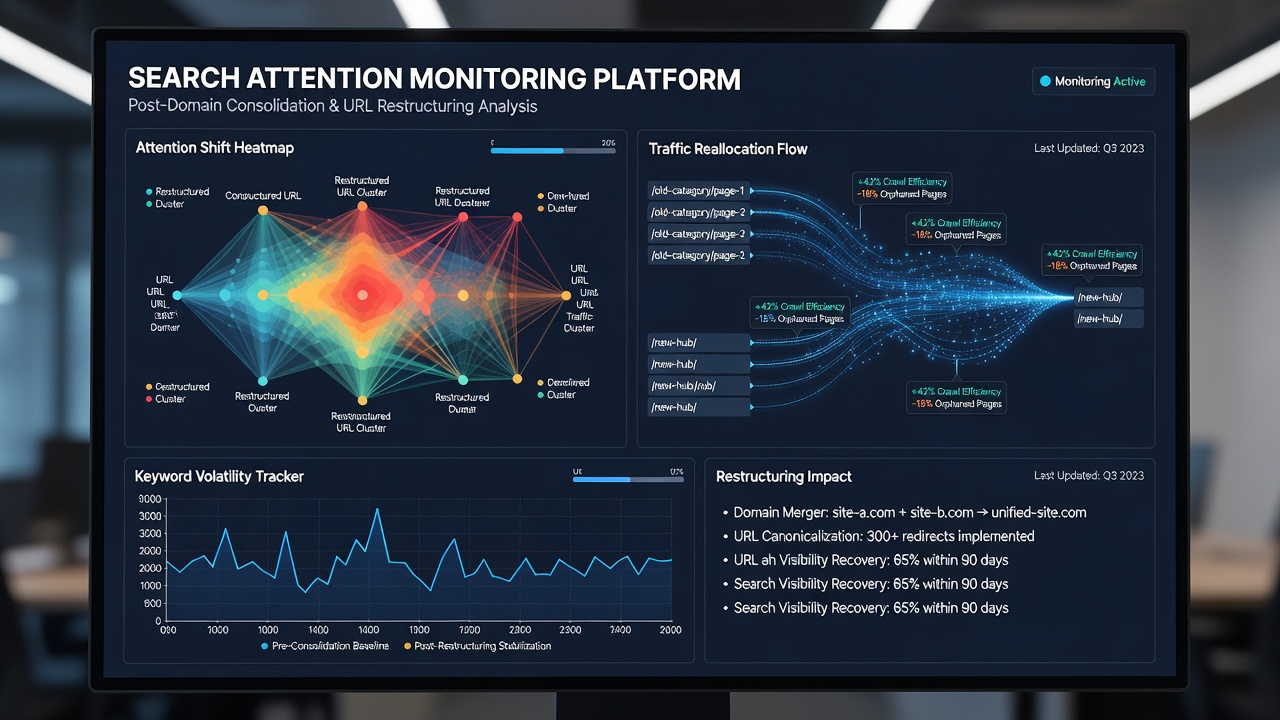
Domain consolidations often trigger extensive URL restructuring projects that force search engines to reallocate attention across thousands of pages, and specialized monitoring platforms have become essential for capturing those shifts in real time. These tools integrate crawl log analysis, indexing status reports, and attention metrics such as crawl frequency and priority signals to reveal how engines like Google adjust resource distribution once multiple domains merge into a single property.
Domain Consolidation Mechanics and Resulting URL Changes
When organizations combine separate web properties, they typically redirect legacy URLs, consolidate content categories, and establish new hierarchical structures, all of which alter the signals that search engines use to allocate crawl budget. Data from large-scale migrations completed in early 2026 shows that engines initially reduce crawl rates on legacy paths while increasing attention on the consolidated domain, creating measurable drops in indexing velocity for older URLs that last several weeks. Observers note that platforms capable of correlating redirect chains with log-file entries help teams identify which pages receive diminished attention before rankings fluctuate.
Core Capabilities of Specialized Monitoring Platforms
Advanced platforms pull together server logs, Search Console API data, and third-party crawl simulators to map attention allocation patterns across both pre- and post-migration states. These systems flag when engines begin treating consolidated URLs as higher priority while deprioritizing duplicate or low-value legacy paths, allowing teams to adjust internal linking and sitemap submissions accordingly. Research indicates that platforms offering granular segmentation by URL depth and content type uncover subtle reallocations that standard analytics miss, especially when thousands of redirects activate simultaneously.
Tracking Attention Shifts in October 2026 Projects
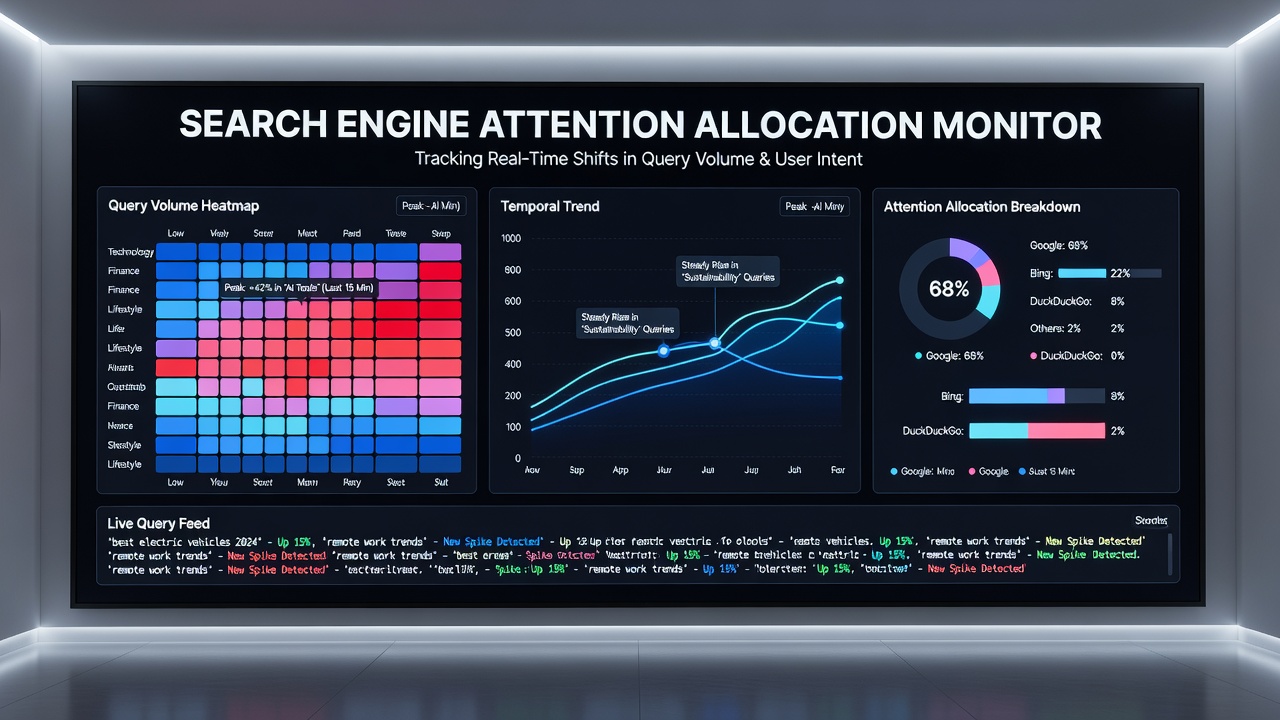
Throughout October 2026, several enterprise consolidations involving retail and media domains have demonstrated consistent patterns where engines temporarily expand crawl budgets on the target domain before settling into a new equilibrium. Monitoring platforms record these expansions through daily log comparisons that highlight increased requests for newly canonicalized URLs and corresponding decreases for redirected source pages. Teams using these platforms have observed that attention often concentrates on hub pages within the new structure while peripheral content waits longer for reindexing, a distribution that becomes visible only when historical crawl data is overlaid with current indexing reports.
Integration with Log Analysis and External Data Sources
Effective tracking requires combining internal server logs with external signals such as indexed page counts and rendering frequency reports, and platforms that automate this correlation reduce manual review time significantly. According to findings published by the Massachusetts Institute of Technology, engines allocate attention based on a combination of historical trust signals and fresh structural cues, making continuous monitoring vital during restructuring. Platforms that surface these cues through automated alerts allow project teams to respond before temporary deindexing affects visibility metrics.
Patterns Observed Across Multiple Consolidations
Case reviews compiled by analysts at the Innovation, Science and Economic Development Canada reveal that attention reallocations follow predictable phases: an initial surge on the consolidated domain, followed by stabilization that favors pages with strong internal link equity. Monitoring platforms capture the duration of each phase by tracking changes in crawl-delay directives and response-code distributions, providing objective timelines that teams use to set expectations for full indexing recovery. Those who have studied these patterns note that platforms offering comparative dashboards across multiple consolidation events help identify outliers caused by technical issues such as malformed redirects or sitemap conflicts.
Conclusion
Specialized monitoring platforms deliver measurable visibility into how search engines redistribute attention during URL restructuring after domain consolidations by unifying log data, indexing signals, and historical benchmarks into actionable timelines. As consolidations continue through late 2026, the ability to quantify these shifts supports more precise management of crawl resources and indexing priorities across merged properties.