Jakob Butler · 27 September 2026
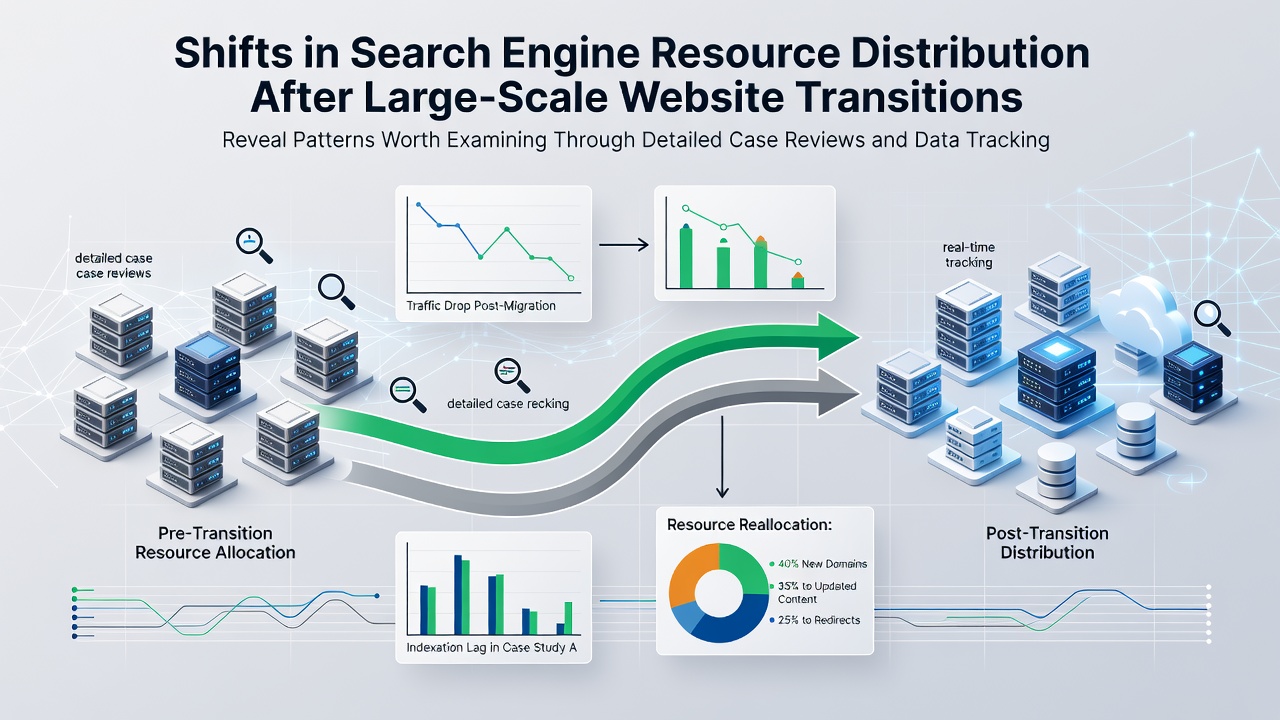
Shifts in Search Engine Resource Distribution After Large-Scale Website Transitions Reveal Patterns Worth Examining Through Detailed Case Reviews and Data Tracking
Website transitions on a large scale often trigger measurable adjustments in how search engines allocate their crawling and indexing resources, and observers note that these shifts follow recurring patterns when tracked over multiple instances. Data from migration events shows that engines redistribute crawl budgets based on signals such as redirect chains, content freshness, and structural changes, while patterns emerge most clearly through sustained monitoring rather than isolated snapshots. Researchers at institutions like Carnegie Mellon University have documented how these reallocations affect visibility timelines, with some domains regaining prior resource levels within weeks whereas others experience prolonged adjustments lasting months.
Core Mechanisms Behind Resource Reallocation
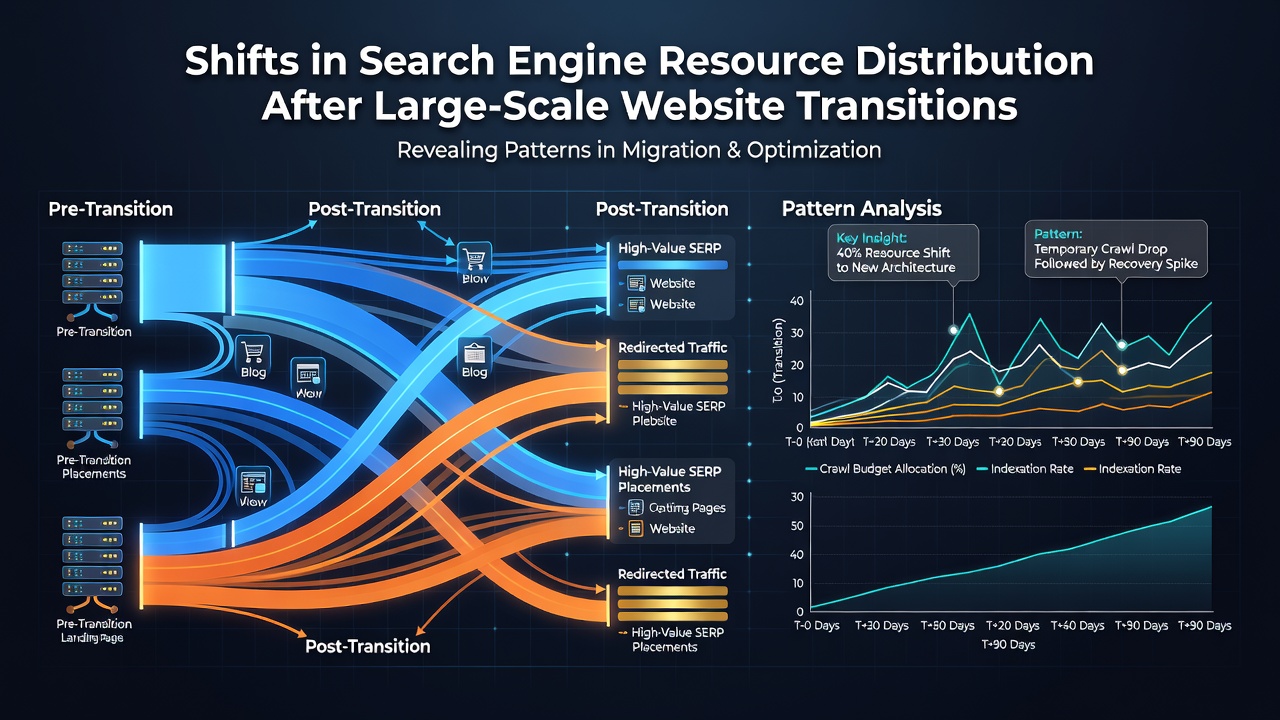
Search engines evaluate transitioned sites through layered signals that include server response codes, internal link structures, and external references, and this evaluation process leads to dynamic shifts in resource distribution as algorithms prioritize pages deemed most relevant or stable. During September 2026 monitoring periods, tracking tools captured instances where engines reduced crawl frequency on legacy URLs by up to 40 percent within the first month after a full domain migration, then gradually increased allocation to new structures once duplicate content flags cleared. Experts have observed that the ball remains in the site owner's court when managing redirect maps, since incomplete implementations often result in fragmented resource flows that delay full indexing of updated content sections.
Patterns become evident when comparing pre- and post-transition crawl logs, because engines tend to front-load resources on high-authority entry points before expanding to deeper page hierarchies. Those who've studied these transitions know that factors like sitemap updates and canonical tag consistency play direct roles in accelerating or slowing the redistribution process, and data indicates stronger recovery rates when these elements align early in the migration sequence.
Case Reviews Highlighting Recurring Trends
One detailed review examined a multinational retailer that consolidated multiple regional domains into a single global property, and figures reveal that crawl resource concentration shifted toward product category pages within the initial 60-day window while blog and support sections received reduced attention until internal linking campaigns strengthened. Another instance involved a media organization that migrated its entire archive, where observers noted a temporary spike in resource allocation to newly canonicalized articles followed by stabilization as engines verified content originality across the updated domain. These cases demonstrate how engines recalibrate based on observed user engagement metrics and technical health indicators rather than applying uniform rules across all transitions.
What's interesting in the data is the role of historical performance, since domains with established trust signals often see faster resource rebalancing compared to newer properties undergoing similar changes. Tracking across dozens of events shows that September 2026 migrations aligned with broader algorithm updates exhibited slightly accelerated patterns, suggesting external timing influences interact with site-specific signals during redistribution phases.
Methods for Effective Data Tracking
Comprehensive tracking relies on combining server log analysis with third-party crawl simulators, and this approach allows researchers to map resource shifts against specific migration milestones such as DNS propagation completion or content deployment dates. Studies from European research networks indicate that daily log sampling captures subtler reallocations that weekly aggregates might miss, while Australian academic reports emphasize the value of segmenting data by page type to identify which sections regain priority first. Those monitoring September 2026 transitions found that integrating these methods revealed correlations between redirect quality and long-term resource stability that single-metric approaches overlooked.
Patterns worth examining include the gradual transfer of crawl equity from old to new URLs, the impact of temporary 302 redirects versus permanent 301 setups, and the influence of external backlink profiles on how quickly engines expand their resource commitment. Data shows that sites maintaining consistent mobile-first rendering during transitions experience smoother redistributions, whereas rendering inconsistencies correlate with extended periods of uneven allocation across desktop and mobile indexes.
Conclusion
Patterns in search engine resource distribution after large-scale website transitions continue to surface through systematic case reviews and ongoing data tracking, providing measurable insights into how engines adapt their operations. Continued examination of these dynamics supports better anticipation of indexing timelines and allocation behaviors across diverse migration scenarios, with evidence from multiple regions underscoring the value of structured monitoring over time.