
Paul Hartmann · 13 September 2026
When Sites Move: Uncovering the Subtle Effects on Search Engine Crawling Behaviors
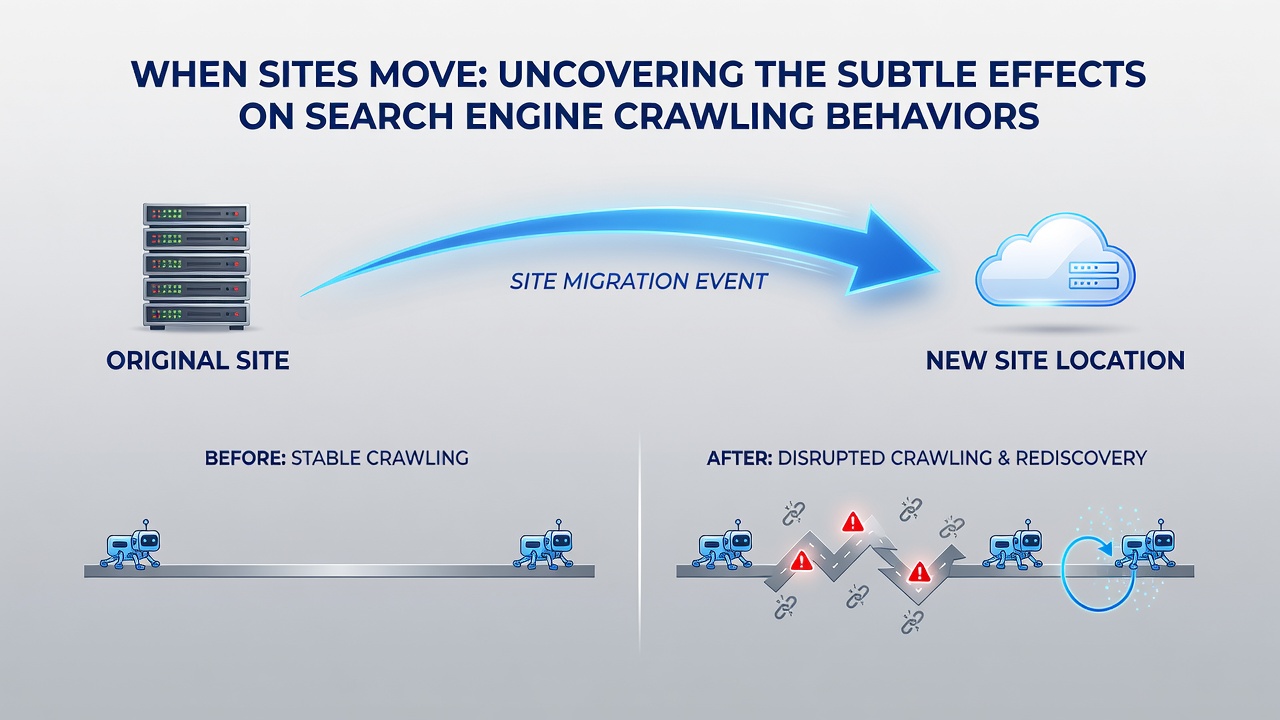
Site migrations trigger a series of adjustments in how search engine crawlers allocate resources and process new URL structures, and these changes unfold gradually rather than all at once. Observers note that the process begins when DNS records update or permanent redirects activate, prompting crawlers to re-evaluate existing paths while discovering fresh ones through updated sitemaps and internal link graphs. Research indicates that major engines adjust crawl frequency based on signals such as server response times, content freshness, and historical crawl patterns, which means a relocated site often experiences an initial dip followed by a recalibration phase that can last several weeks.
How Crawlers Detect and Respond to Relocations
Search engines rely on multiple discovery mechanisms, including submitted sitemaps, backlink signals, and direct URL submissions, so when a domain changes hands or content shifts to a new host, these pathways must realign. Data shows that crawlers prioritize pages with strong historical signals first, which leads to uneven coverage during the transition period where some sections receive attention while others wait longer for reprocessing. Engineers at search providers have documented cases where partial redirects cause temporary fragmentation, forcing the system to reconcile old and new addresses through repeated visits that consume additional crawl budget.
Impact on Crawl Budget and Frequency
Crawl budget represents the number of pages an engine processes within a given timeframe, and migrations alter this allocation because new domains start with limited trust signals until redirects and content consistency demonstrate stability. Studies from academic institutions reveal that sites undergoing structural changes see crawl rates fluctuate by as much as 40 percent in the first month, with recovery tied to consistent server performance and proper implementation of canonical tags. Those who monitor server logs often discover that mobile-first indexing adds another layer, since separate mobile crawlers may respond on slightly different schedules than desktop agents, creating staggered re-indexation patterns across device types.
But here's the thing: even minor elements like robots.txt adjustments or hreflang configurations can influence how quickly secondary pages regain visibility in results. When a site moves to a new top-level domain, for instance, regional search variants may apply different weighting, which means crawlers from various data centers ramp up activity at uneven intervals. Figures from industry reports compiled in mid-2025 already pointed to increased scrutiny around JavaScript-rendered content during migrations, and this trend continues into 2026 as rendering resources remain finite.
Redirect Chains and Their Ripple Effects
Permanent redirects serve as the primary bridge between old and new locations, yet long chains or temporary status codes can dilute signal strength and slow the transfer of crawl equity. According to documentation from search engine developers, each additional hop in a redirect sequence consumes extra processing capacity, which sometimes results in delayed discovery of deeper site sections. Researchers at the University of Toronto have examined log data from enterprise migrations and found that sites maintaining under three redirect hops achieve faster stabilization of crawl patterns compared with those using layered forwarding rules.
What's interesting is how external backlinks factor into the equation. Crawlers follow these links to the old addresses first, then follow redirects to reach updated content, and this extra step can temporarily reduce the rate at which fresh pages enter the index. In September 2026, ongoing refinements to core web vitals evaluation continue to intersect with migration handling, since performance metrics now influence priority scoring during the re-crawling phase. Observers tracking European digital infrastructure note similar patterns emerging from regional engines that synchronize with global indexes at different intervals.
Monitoring and Adjusting During the Transition
Server log analysis provides the clearest window into crawler behavior, revealing which user agents visit, how often, and which paths receive priority after the move completes. Tools that aggregate these logs allow site operators to spot bottlenecks such as blocked resources or slow-loading templates that suppress further exploration. Evidence suggests that submitting updated sitemaps through official channels accelerates the re-discovery process, particularly when combined with internal linking updates that point crawlers toward high-value pages.
Yet the reality is that complete re-indexation rarely occurs uniformly across all engines. One study revealed that secondary engines sometimes lag behind primary ones by several days, creating temporary discrepancies in coverage metrics. People who maintain detailed change logs during migrations report that pairing redirect implementation with content audits helps maintain steady crawl signals, because fresh material encourages more frequent revisits once initial mapping stabilizes.
Conclusion
Site movements introduce measurable shifts in crawling dynamics that unfold over weeks rather than days, and successful navigation of these changes depends on precise redirect setup, consistent performance, and proactive monitoring of log data. Data from multiple regions shows that engines recalibrate budgets according to demonstrated reliability, which means preparation before the move and attentive follow-up afterward determine how smoothly the transition completes. Those managing such projects benefit from tracking both primary and secondary engines to ensure comprehensive coverage returns across the full index landscape.